
How To Choose Cannabis Strains By Desired Effect: A Practical Guide That Actually Works
Most people use cannabis for specific goals

For anyone new to the world of cannabis, there is often a moment of confusion when they learn that eating raw cannabis flower won’t actually get them “high.” Despite the plant’s reputation for its psychoactive effects, the raw plant material is surprisingly inert until it undergoes a specific chemical transformation. This transformation is known as decarboxylation.
Decarboxylation is the unsung hero of the cannabis experience. Without it, the potent brownies, gummies, and vape cartridges we know and love would simply be inactive plant matter. Whether you are a curious consumer, a home grower looking to make your own edibles, or just someone fascinated by the science of this complex plant, understanding decarboxylation is essential.
In this comprehensive guide, we will dive deep into the science behind the process, explain why it is necessary for activating cannabinoids like THC and CBD, and explore the best methods for achieving perfect decarboxylation at home.
In simple terms, decarboxylation (often shortened to “decarbing”) is a chemical reaction that removes a carboxyl group from a molecule. In the context of cannabis, it is the process of using heat and time to convert the acidic forms of cannabinoids into their active, neutral forms.
The cannabis plant does not naturally produce significant amounts of THC (tetrahydrocannabinol) or CBD (cannabidiol). Instead, it synthesizes cannabinoid acids, primarily THCA (tetrahydrocannabinolic acid) and CBDA (cannabidiolic acid). These precursor compounds have their own potential therapeutic benefits, such as anti-inflammatory properties, but they are non-intoxicating. This means that if you were to juice raw cannabis leaves or eat a fresh bud, you would not experience the euphoric effects associated with smoking or vaping.
Decarboxylation acts as the “switch” that turns these inactive acids into the potent compounds consumers seek. This happens naturally over a long period as the plant dries and cures, but it occurs rapidly and completely when heat is applied. This is why smoking flowers is effective immediately—the flame of a lighter provides instant decarboxylation.
To appreciate why decarboxylation is so vital, we need to look at the chemistry happening at a molecular level.
The raw cannabis plant is abundant in carboxylic acids. A carboxyl group (COOH) consists of one carbon atom, two oxygen atoms, and one hydrogen atom. This group makes the molecule heavier and changes its shape, preventing it from fitting into the cannabinoid receptors (CB1 and CB2) in the human body’s endocannabinoid system efficiently.
Decarboxylation is a function of both temperature and duration. It is not as simple as just getting the plant hot; it requires a specific “thermal history.”
Understanding this process isn’t just academic; it has practical implications for how cannabis products are made and consumed.
For recreational users, decarboxylation is the most critical step. Without it, products designed for ingestion would fail to deliver the desired experience. When you buy gummies or chocolate edibles, the manufacturer has already ensured that the cannabis oil used in the recipe was fully decarboxylated. This ensures that when your liver processes the THC, it is in the active form necessary to cross the blood-brain barrier effectively.
For medical patients, bioavailability is key. Whether using cannabis for pain relief, insomnia, or anxiety, patients need the active compounds to be available to their bodies. Decarboxylation ensures that tinctures, capsules, and oils contain the maximum amount of active CBD or THC, allowing for smaller, more effective doses.
The cannabis industry relies on decarboxylation to create a wide range of concentrates. Before making distillate for cartridges or infusing oils for topicals, the raw material usually undergoes this heating process. This allows producers to create potent, consistent products that don’t require combustion to work.
If you are planning to make your own butter, oil, or tincture using house blend premium prerolls or loose flower, you must decarboxylate the cannabis first. Here are the most effective methods.
This is the most accessible method for home cooks.
Decarbing cannabis can be very smelly. To contain the aroma, use a mason jar.
For the most consistent results, sous vide is the gold standard.
Even with simple methods, things can go wrong. Avoid these pitfalls to ensure your material isn’t wasted.
On an industrial scale, decarboxylation is a precise science. Companies producing thousands of disposable cartridges or tinctures use large, vacuum-sealed ovens or reactor vessels.
Many modern extracts, especially for vape pens, start with CO2 extraction. This process pulls the cannabinoids out at low temperatures, preserving the acid forms (THCA). Manufacturers then have the choice to leave it as is (often sold as “sauce” or crystalline) or to heat the oil in a secondary step to activate it for products like distillate.
One of the biggest challenges in industrial decarboxylation is terpene loss. Terpenes are volatile and evaporate at lower temperatures than cannabinoids. To combat this, advanced processors often separate the terpenes first, decarb the cannabinoids separately, and then reintroduce the terpenes to the final oil. This ensures that a Gelato 33 vape cart tastes just as delicious as the flower it came from.
Why should the average consumer care about this chemistry? Because it empowers you to customize your experience.
When you understand decarboxylation, you understand potency. If you buy a 1000mg pack of Stoner Patch Gummies, you know that the manufacturer has calculated the active THC content precisely. This allows for predictable, safe dosing, which is crucial for avoiding an overwhelming experience.
Knowing how to decarb allows you to do more with your flower than just smoke it. You can turn a bag of Shake into a month’s supply of potent cannabis coconut oil. You can make your own capsules or even sprinkle small amounts of decarbed flower directly onto food (often called “firecrackers”) for a quick edible.
Cannabis can be an investment. By ensuring you are activating 100% of the available THC in your flower before cooking with it, you are getting the most value for your money. Improper decarbing leaves potential potency on the table.
Decarboxylation is the bridge between the raw potential of the cannabis plant and the potent, therapeutic effects we utilize. It is a fundamental chemical process that underpins the entire edible and concentrate market. Whether you are enjoying a Punch Bar or using a Most High Live Resin Pen, you are experiencing the results of successful decarboxylation.
For the home enthusiast, mastering this simple use of heat and time opens up a world of culinary possibilities, allowing you to transform raw flowers into versatile, potent infusions. It turns the kitchen into a laboratory and the consumer into a chemist, providing deeper control over how you consume and enjoy cannabis.
To dive deeper into cannabis science, explore new recipes, or discover the latest products hitting the shelves, be sure to visit our blog for more information.
Most people use cannabis for specific goals
There are about 200 different terpenoids identified
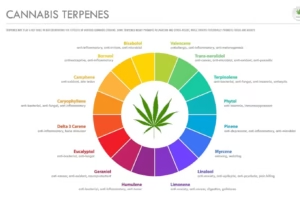
Have you ever wondered why some cannabis